
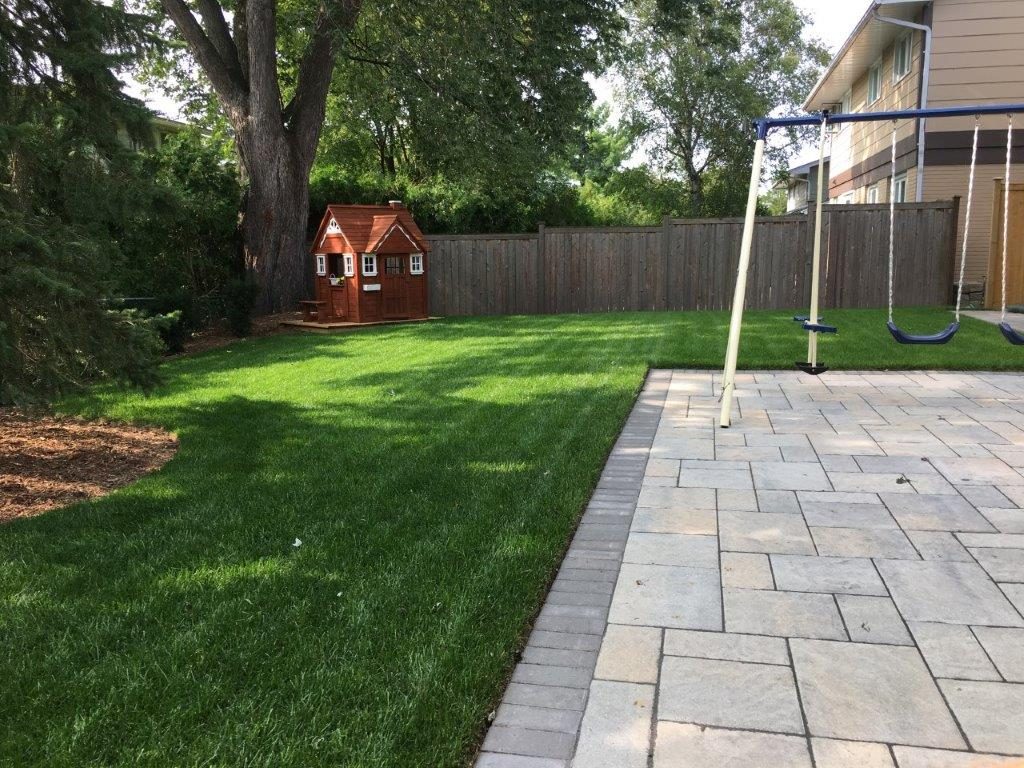
What causes a bumpy lawn?
Knowing the causes and effects will help you decide on the best course of action. The most common culprit is poorly installed soil and traffic. Wrong mower pattern and uneven watering can create rough soil. Lawns can even get undulation when there is no air circulation. Soil absorbs the nutrients that prevent root growth. Animals are at play. Pests traps can create holes and raise areas, and pets can dig up the turf to get rid of the dirt. Weather can be crazy. Poor drainage can also cause bumpy surfaces as water accumulation can cause soil to shift and create uneven areas.
How bumpy is your lawn?
A thorough assessment of the unevenness of your lawn will determine the extent of work and intervention needed for this process. According to experts, there are many ways to classify grass unevenness: mild to moderate and severe.
Fill in the Low Spots with Leveling Mix
Now let’s start a clean and smooth lawn by spraying bio-stimulant fertilizer. Fill sand, compost or soil mix in low areas of the lawn to create a hole. This means low areas should be flush with the surrounding grass. You can use your leveling rake. Use your foot to level the ground at the lowest point. Add more leveling mix to fill in the air pockets and level it out again with the surrounding turf. Repeat until you’re satisfied. This method prevents reapplication of a level mix later. When leveling your rough areas, keep the grass blades exposed so they get enough sunlight.
Tools & Materials
Bobvila.com will be paid by customers who buy through this website.
How to level mild unevenness
Leveling for mild unevenness involves topdressing which is a simple and affordable method. If your lawn is uneven in areas you may want to topdress. It’s a cheap DIY solution that requires very little effort. Tool and equipment: How to make topsoil mixture by mixing sand and soil. Some homeowners use a mix of compost and soil to add extra nutrients. Then put in soil and spread the soil on the depression in your lawn. Then use a rake on a clean lawn using broom, gardening rake, level rake and a smooth soil mixture. Use lawn rollers with water if you prefer to compact lightly.
Mow Your Lawn
Leveling starts when you mow the grass. Keep this short. Don’t go for the shorter version. The grass will dry up as soon as you cut through it so it’s not visible.
How to level moderate unevenness
Sometimes there are divots or bumps in your grass that need to be removed with more effort. If you have a deep depression or many rutted areas in your garden don’t hesitate to consult a specialist if needed. Step 1: Prepare topsoils by mixing equal parts topsand with sand. 2. Place the prepared soil mix on the corners of your garden. Use a shovel to remove soil and create a rounded area with no gaps. Step 4: Use a push-bin or a lawn sweeping tool to smooth and mix. After leveling, sprinkle grass seed on the treated areas to promote new growth and have a uniform lawn.
Check the thatch at the roots of your lawn then dethatch as needed
Check your grass roots in your garden. Thatch is an area of dead grasses and organic matter that covers the surface of the turf. A little more than 2 inches of thatch is okay, more is bad. Whenever the thatch is more than 1-2 inch thick remove it by raking on top and lifting the surface. For smaller lawns a thatch rake is a good tool for this job. Or if your lawn is bigger put the hose in. You may need to rent a dethatcher from a local hardware store.
Why Yard Leveling is Important
It’s nice to have a beautiful landscape. A level yard keeps your exterior landscape stable. This also prevents major damage to the foundation. Your lawn should slope up to the outside so the rainwater drains slowly into your foundation. When rainwater enters your home it accumulates around your foundation walls. So moisture builds up on the surfaces. Weakening the foundation. It can get serious. The water will seep into your walls and drain to the floor. Keeping a level yard also helps the overall health of the lawn by distributing water and nutrients evenly.
More Tips for Leveling a Bumpy Lawn
Here’s an article on lawn leveling tips.
How to level severe unevenness
Uneven lawns can be complex or tricky. Depending on the damage you may need to regrade your entire yard. Hire a landscape professional who can help you assess your unevenness. This team can diagnose the root of the problem that causes them and design a solution to fit their needs. Lawn care techs have specialized equipment for tasks from digging, grading or removing soils. Using a pro helps minimize risk and guarantees results.
Lawn Leveling Equipment Checklist
Wheelbarrow – Shovel leveling rake Broadcasting spreader Core air aerators.
When to Grade a Yard
Consider leveling your backyard when water is leaking out from the street, in the water or on puddles, when they look ugly. Whether or not to set the lawn can be dependent largely on the cause of the bump and the small spots. When the lawn compacts as it gets used by people mainly by daily trips to trees, try lowering the level or creating a road in a hardscape before the peak of the summer “club seasons” for kids. Most cases work well when done in spring. It’s during this time that grasses come out of their dormancy.
Dig up the grass in the sunken areas of the lawn and fill with soil mix
If the shallow spots and holes are more than 2 feet deep, remove the grass above the holes and fill the holes accordingly. Remove the soil and put the shovel blade in the soil and then slide it down about 2-3 cm to get underneath the roots. Using the shovel you can pull the grass out of it and expose the muddy soil underneath. Fill the hole with top dressing mix lying on the ground. The soil should slope away from your foundation. Get out and move the soil to the higher elevation near the house but not so high that it covers the entire foundation.
Make Soil Mix: Topsoil, Sand and Compost
Mix soil / compost to fill the soil below your lawn to give your grass the nutrients it needs to grow. Sand is less compact. Leave the soil level for the long run!
Apply Fertilizer to Speed Recovery
Apply lawn fertilizer. The simplest and most effective way of fertilizing grass is to do soil test. The best high quality fertilizers for farmers are Lebanon Turfs Humic Max. This super effective fertilizer promotes fast grass recovery and good for almost all types of grass. Apply humicmax 3 pounds per 1000 sq. ft. Fe. Alternatively, you can use starter fertilizer. When used alone, fertilizer will improve soil.
How to Grade a Yard
First, mow the lawn. Grass should never be exposed because it will get wet fast. Mowing from lower areas allows you to see how uneven the lawn looks, to know how much top dressing to apply. Mow less than your grass’ recommended mower height found here. Step two: Dethatch After slicing up the dirt from a grassy area, look at the amount of thatch that has been built up over time. Thatch is dead vegetation that has been buried underneath the grass.
What causes an uneven lawn?
Before grading a yard, it’s very important to know what causes the bumps or low areas. Knowing the root of the problem is important to prevent future problems. Your yard changes a lot as it evolves and bumps and depressions happen naturally. In some cases however, you can find the reason for uneven surfaces. Various factors are involved in the unevenness of the lawn including:
Spread the remaining soil mix in a thin layer to even out the entire lawn
Once you’ve filled your low areas you’ll need to apply the mix to your lawn to a depth of 1-3 inches. Although it may seem like grass needs more depth to be even out, be patient and keep it thin—more layers will choke the grass. If needed, repeat these steps and add another layer. Spread this mix on bare grass using the bow rake. Mix in the mix in low areas during grading.
How to Grade a Yard [8 Steps]
Now you can start landscaping. Use this 8 step guide to level your lawn.
How Do I Know if There’s a Grading Problem?
Check for standing water in your yard and see if there are issues. If the drainage is poor, there are problems. You can measure the slope of your yard to get the best results. The ground around your house should slope about 1/4 inch down for every foot away from your house. That’s 3ft per meter. So 10ft below the house, the ground should be 2ft below your house level. Measure your slope using 3ft long wood stakes. Drive it 1ft into the soil beneath the house.
Fill in Low Areas and Holes with Soil Mix
Fill in a hole at step 3 and mix at step 4. After you fill in these holes you must add grass to the hole.
Problems with an uneven lawn
An uneven landscape can cause many problems, both physical and cosmetic, to your landscape design. Sometimes the problem with an uneven yard can be solved for the sake of its beauty, health and safety. Fixing these problems will improve our outdoor space.
Water Lawn After Leveling
When the lawn is clear of dirt, water it to settle. Water cans, garden hoses and automatic irrigation systems can be used. You should see grass grow within a week. The regrowth should be even and thick on smooth surfaces when done right. Proper watering helps the topdressing mix settle and fill in air pockets so nutrients are distributed evenly in the soil.
Reapply the soil mix as needed
Check the runoff water after several waterings. The best solution for a smoother grass will be more than one topdressing. Apply the second layer using step 5 and 6 when the vegetation starts to grow or the grass isn’t growing.
How do I fix an uneven lawn?
Once you have the tools, it’s easy and fast. First mow the lawn before you find the dip. Fill it with sand and compost. Sod is removed by digging up high spots and repositioning a small amount of soil before slicing it out again and replacing it. Cover all lawns with 1 inch of topsoil and water. You may need to topdress again after it settles.
How much will it cost?
If you already have some basic tools, leveling a yard is easy. You can get a simple set of rotary dryers for $100. A thatching rake will cost around $40. You can hire these equipment for $100 or more. Manual aerators are $30 to $300 for more advanced models. An Aerator will cost $100 to rent per week. Depending on your type of lawn, a yearly professional lawn aeration is usually $60 to $200.
What kind of dirt to use for grading?
Removing a few inches of soil will loosen the soil. Mix the topsoil with the soil. Add a slope outside the house 2% will do. Leave some soil to settle before testing again. Before digging, check utilities and the basement if you are in a hard to reach or flooded area.
When to level your yard?
The best time to level a yard is between March to October. The grass is active when it’s growing and the surface is smooth and even. But be aware of what kind of grass you have. For lawns with warm grass during winter, late spring is recommended for grading. For hot grass, level your lawn in fall.

What Is Landscaping | Your Guide To A Dream Landscape
What is landscaping? At its core, landscaping is the art...
Read More

Rhythm and Movement Landscaping
Enhance landscape design with rhythm and movement.
Read More
Outdoor Entertaining Areas
Creating the Perfect Outdoor Entertaining Area: A Comprehensive Guide to...
Read More
Simplicity in Landscape Design
The importance of simplicity in effective landscape design.
Read More